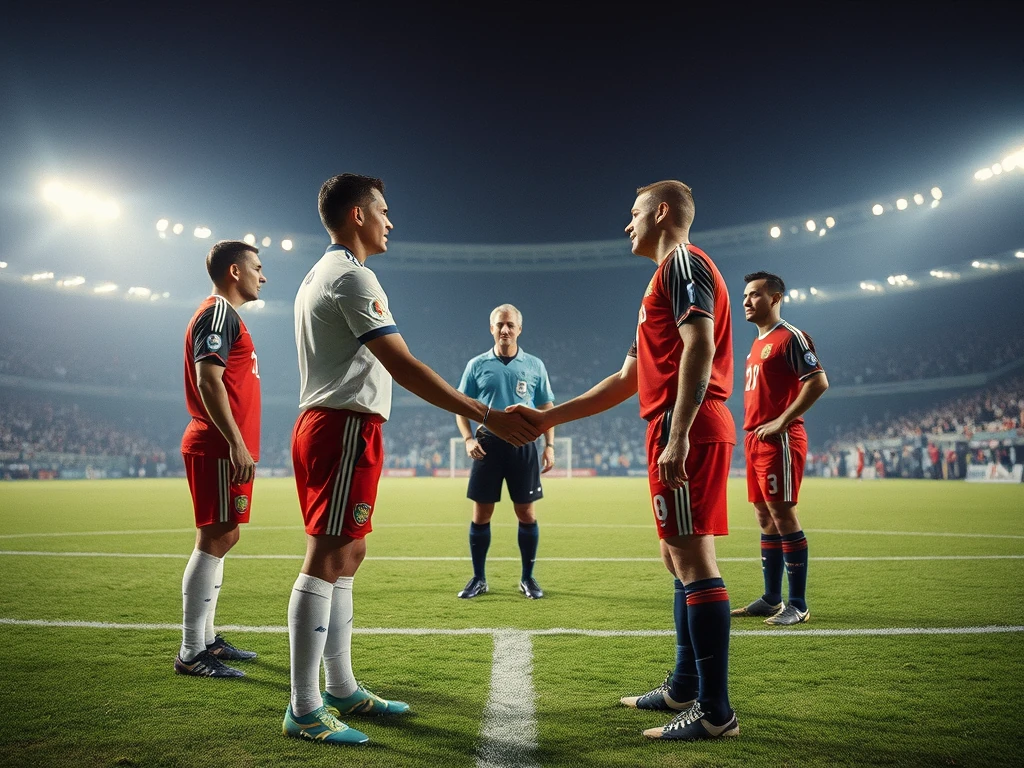

Portugal: A Tactical Analysis
In recent matches, the Portugal national team has displayed an offensive approach, supported by creative players like Bruno Fernandes and Bernardo Silva. However, defensive capabilities have raised concerns, particularly during quick transitions from opponents. The defense, while talented, seems exposed at moments of losing possession, which could be a critical factor in the 2026 World Cup.
The Transition Defensive Problem
In several recent games, it has been evident that the national team struggles to reorganize quickly after losing possession. The midfield, which should serve as the first line of defense, often leaves gaps that opponents exploit. Adding a more defensive player, such as William Carvalho, could help stabilize transitions, providing more coverage and protection to the backline.
Improving Offensive Structure
While the attack has shown quality, the lack of a fixed center-forward has created difficulties. Utilizing a traditional striker, like Gonçalo Ramos, could give the team a focal point in attack, allowing players like Diogo Jota and Félix to play more freely and create space and opportunities. Transitioning to a 4-3-3 or a 4-2-3-1 formation, with Ramos up front, could be a viable solution to maximize offensive efficiency.
The Importance of Positional Play
Furthermore, the national team needs to focus on positional play. The use of quick triangulations and coordinated movements can open passing lanes and create opportunities. Incorporating a player like João Mário, who has the vision and skill to make decisive passes, can be crucial for improving game fluidity.
Adjustments in Defensive Markings
Defensively, it is essential for Portugal to adopt a more compact and organized marking strategy. Instead of pressing all over the field, a more balanced zonal marking could be more effective, allowing the team to maintain shape and minimize spaces that opponents can exploit. Integrating an experienced defender who can lead this line, such as Rúben Dias, will be crucial.
Conclusion
Portugal has the potential to be a force in the 2026 World Cup, but some tactical changes are necessary to optimize the team. With adjustments in defensive transitions, offensive structure, positional play, and marking, A Seleção das Quinas can become more competitive and ready to face the challenges ahead.